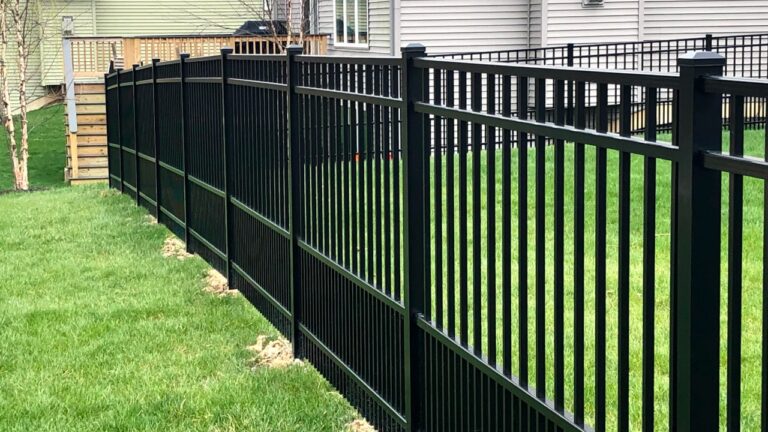
Part 1: Aluminum fence repair
Loose panels
A panel that rattles or sags on its brackets usually has a simple cause: screws that have worked loose in the post, or a post that has shifted slightly. Tighten or replace the fasteners first (one size up in stainless screws often bites fresh metal), then check the post for plumb. If the post moved, the panel fix won't hold — re-set the post using the same process as the leaning fence guide.
Bent panels and pickets
Aluminum bends rather than breaks — a mower, a car bumper or a fallen branch leaves a bowed rail or a row of bent pickets. A gentle bend in a rail can sometimes be eased back with padded leverage, working slowly to avoid cracking the powder coat. Pickets, though, are usually part of the welded or fastened panel: individual picket replacement depends on your system (some brands' pickets unbolt; welded panels don't). The standard repair is to unbolt the panel from its posts and fit a replacement panel — which is why keeping your fence's brand and style name matters.
Gate alignment
The most common aluminum fence service call. Gates sag on their hinges or get knocked out of square, and the latch stops meeting. Work in this order: check the gate post is plumb and firm (a flexing post defeats every other adjustment), then adjust the hinges — most aluminum gate hinges are adjustable for height and tension — then align the latch. Self-closing hinges that have lost their spring get replaced, not repaired, and on pool gates that's a code item, not a preference.
Finish touch-ups
Powder coat doesn't peel like paint, but scratches down to bare metal should be touched up to protect the spot and keep it invisible: clean the scratch, apply the manufacturer's touch-up paint (or a matched exterior enamel), and keep it small. Aluminum itself doesn't rust, so touch-ups are cosmetic insurance rather than structural rescue — unlike iron, below.
Codes decide pool fencing, not taste
Height, picket spacing, self-closing gates and latch height are regulated in most places. Our hiring guide covers what to verify before you sign anything.
Part 2: How to install an aluminum fence
Aluminum fences install as prefabricated panel sections between posts — no welding, no stretching, no framing. Planning, permits, property lines and the 811 call are covered in the general build guide. The aluminum-specific sequence:
-
Lay out to the panel width
Panels come in fixed widths (commonly 6 feet) and can be trimmed, but not stretched. Mark post positions at exact panel spacing along your string line, planning gates and the inevitable short section at a corner. On slopes, decide now: racked panels (which angle to follow the ground, on rackable systems) or stepped panels (level sections in steps).
-
Dig and set the posts
Dig holes about 6–8 inches wide and 24–30 inches deep (deeper past the frost line where that applies), set each post in concrete, plumb and brace it. Because panels must land exactly on the posts, many installers set one post, fit the panel, then set the next post to the panel — working along the run guarantees the spacing a tape measure alone won't.
-
Fit the panel sections
Slide or bolt each panel's rails into the routed post holes or brackets, level it, and fasten with the supplied screws. Keep the bottom rail a consistent couple of inches above grade — following the ground on racked sections, stepping cleanly on stepped ones. Check the top line against your string as you go.
-
Hang the gates
Gate posts get the sturdiest footings (gates concentrate all their weight on one post). Mount the adjustable hinges, hang the gate, set the gap even on both sides, and fit the latch at the correct height — self-closing, self-latching hardware where pool code or local rules require it.
-
Finish: caps, touch-ups, check
Press on the post caps, touch up any installation scratches with touch-up paint, and walk the line checking every fastener and the gate swing. Keep the brand, style and color name in your records — future panel replacements depend on them.
Aluminum fence questions, answered
Does an aluminum fence rust?
No — aluminum doesn't rust. It can oxidize lightly if the powder coat is breached and left for years, which is why scratches get touched up, but there is no equivalent of iron's spreading rust problem. That, more than anything, is why aluminum is the default pool fence.
How much does aluminum fence repair cost?
Repairs typically run about $10–$40 per linear foot depending on the work, and individual replacement panels range from roughly $50–$100 for standard styles to several hundred for ornate ones, before labor. Gate hardware fixes sit at the cheap end. Full context is in our fence repair cost guide.
Can I replace just one picket in an aluminum panel?
It depends on the system. Some residential aluminum panels have individually fastened pickets that unbolt; welded or fully-assembled panels don't, and the repair is a panel swap. Identify your brand first — a fencing supplier can usually tell you from a photo of the rail and fasteners.
Is aluminum fencing strong enough for a big dog?
Standard residential-grade aluminum handles typical dogs fine, but determined large dogs can bend pickets. Heavier "industrial" or double-picket grades exist for exactly this case; if you're replacing bent pickets repeatedly, upgrading the grade of that section beats repeating the repair.