The six main fence types at a glance
| Fence type | Typical lifespan | What usually goes wrong |
|---|---|---|
| Wood | 15–20 years | Post rot at ground level, broken or warped pickets, sagging rails, leaning sections |
| Vinyl / PVC | 20–30 years | Cracked panels from impacts, leaning posts, rails popping loose, brittle plastic in cold weather |
| Chain-link | 15–20 years | Sagging or torn mesh, bent top rails, lost tension, rust on older galvanized fabric |
| Aluminum | 20–30 years | Loose or bent panels and pickets, gates out of alignment, finish scratches — but no rust |
| Wrought iron | 30–50+ years | Rust wherever the paint fails, broken welds, sagging heavy gates |
| Composite | 25–30 years | Cracked or warped boards, surface fading, mold in shaded spots, post problems like any fence |
Lifespans assume reasonable installation and basic upkeep. A well-maintained cedar or iron fence can outlast these ranges by a decade or more; a neglected wood fence in wet soil can fail in half the time.
Wood fences
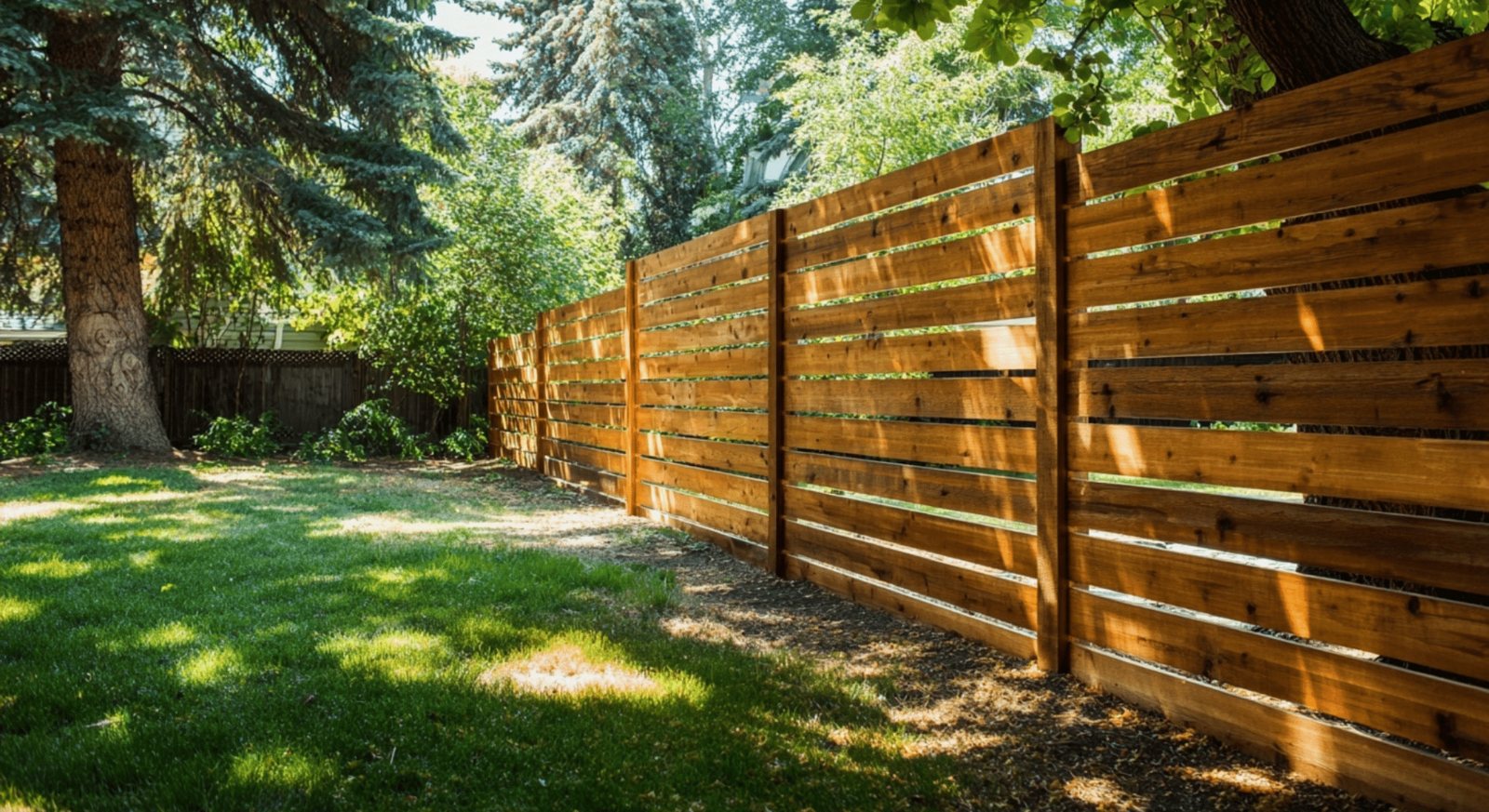
The most common backyard fence in America: pressure-treated pine or cedar pickets on wood posts and rails. Wood is the cheapest privacy fence to build and the easiest to repair piece by piece — and the only one that rots. Expect post rot, cracked pickets and sagging rails over its life. Wood fence repair & how to build a wood fence →
Vinyl / PVC fences
Interlocking plastic panels and rails on hollow posts, usually with an internal or concrete footing. Vinyl never rots or needs painting, but it cracks on impact — especially in cold weather — and repairs usually mean replacing a whole panel with an exact match. Vinyl fence repair & how to install a vinyl fence →
Chain-link fences
Galvanized steel mesh stretched between metal posts, held by a top rail and tension bars. The budget option and the most forgiving to repair: mesh can be patched, rails replaced, and tension restored with hand tools. It offers security and durability, not privacy (unless you add slats). Chain link fence repair & how to install a chain link fence →
Aluminum fences
Powder-coated aluminum panels that mimic wrought iron's look without the rust or the weight. Panels rack to follow slopes and bolt between posts. Repairs are mostly mechanical — straightening, re-securing, realigning gates — and the finish needs only touch-ups. Aluminum fence repair & how to install an aluminum fence →
Every fence type starts the same way
Permits, property lines, 811, layout and posts — our general build guide covers the steps all six fence types share.
Wrought iron fences
Real iron — heavy, strong, and measured in decades. Genuine wrought iron is now mostly found on older and high-end properties; much of what's sold as "iron" today is welded steel. Its one enemy is rust: keep the paint intact and an iron fence outlives everything else on this page. Broken welds and fabrication are professional work. Wrought iron fence repair & rust removal →
Composite fences
Boards or panels made from wood fiber and recycled plastic, usually slotted into grooved posts. Composite doesn't rot, warp as readily as wood, or need staining — but it costs more up front, can fade, and cracked boards must be replaced whole. Composite fence repair & how to install a composite fence →
Which fence type is easiest to repair?
Chain-link and wood, by a clear margin. Both come apart with hand tools, parts are cheap and stocked everywhere, and a mistake costs a few dollars. Aluminum is next — mechanical fixes, no rot, no rust. Vinyl and composite repairs are simple in motion (swap the panel or board) but depend on finding an exact match for your profile and color. Wrought iron is the hardest: rust work is DIY-friendly, but anything structural means a welder.
Which fence type lasts the longest?
Wrought iron, kept painted, is the longevity champion at 30–50 years or more. Composite and vinyl follow at roughly 25–30 years, aluminum close behind. Wood is the shortest-lived at 15–20 years — but it's also the cheapest to build and the cheapest to repair, which is why it remains the most popular. For a repair-versus-replace decision on any type, see the rule of thumb in our cost guide and DIY or hire a pro?
Repair guides by problem, not material
Some fence problems cut across every material above. Four of our guides are organized by the problem in front of you rather than the fence type: how to repair a rotted fence post — the ground-line failure behind most wood fence leans; sagging gate repair, covering hinges, latches, frames and gate posts; storm and wind damage fence repair, from safe assessment to documenting damage for insurance; and how to replace a fence panel on wood and vinyl fences. For the post failure that tips a whole run over, start with the leaning fence guide.
And three ownership guides round out the set, whatever your fence is made of: the seasonal fence maintenance checklist that keeps every material above alive longer, how to paint or stain a fence for the wood, composite and iron fences that take a finish, and how to remove an old fence when a fence of any type reaches the end of its life.
Fence type questions, answered
What is the cheapest fence type to build?
Chain-link is usually the cheapest fence to have installed per linear foot, followed by basic wood privacy fencing. Exact installed prices vary widely by region, height and terrain — treat any per-foot figure as a rough planning range and get local quotes. Our build guide covers what drives the price up or down.
What is the lowest-maintenance fence type?
Vinyl, aluminum and composite are the low-maintenance three: no staining, no sealing, just occasional washing. Aluminum edges out the others for pool and view fencing because it never rusts; vinyl and composite win for solid privacy panels.
Can I mix fence types on one property?
Yes, and it's common: a privacy fence (wood, vinyl or composite) in the backyard, aluminum around a pool, chain-link on a side run where looks matter less. Just check HOA rules first — many regulate the visible front and side fencing specifically.
Which fence type is best for a pool?
Aluminum is the classic pool fence: it meets most pool codes, doesn't rust near water, and keeps sightlines open. Vinyl privacy fencing is also used, but local pool codes typically require specific heights, self-closing gates and latches — verify your local code before choosing.