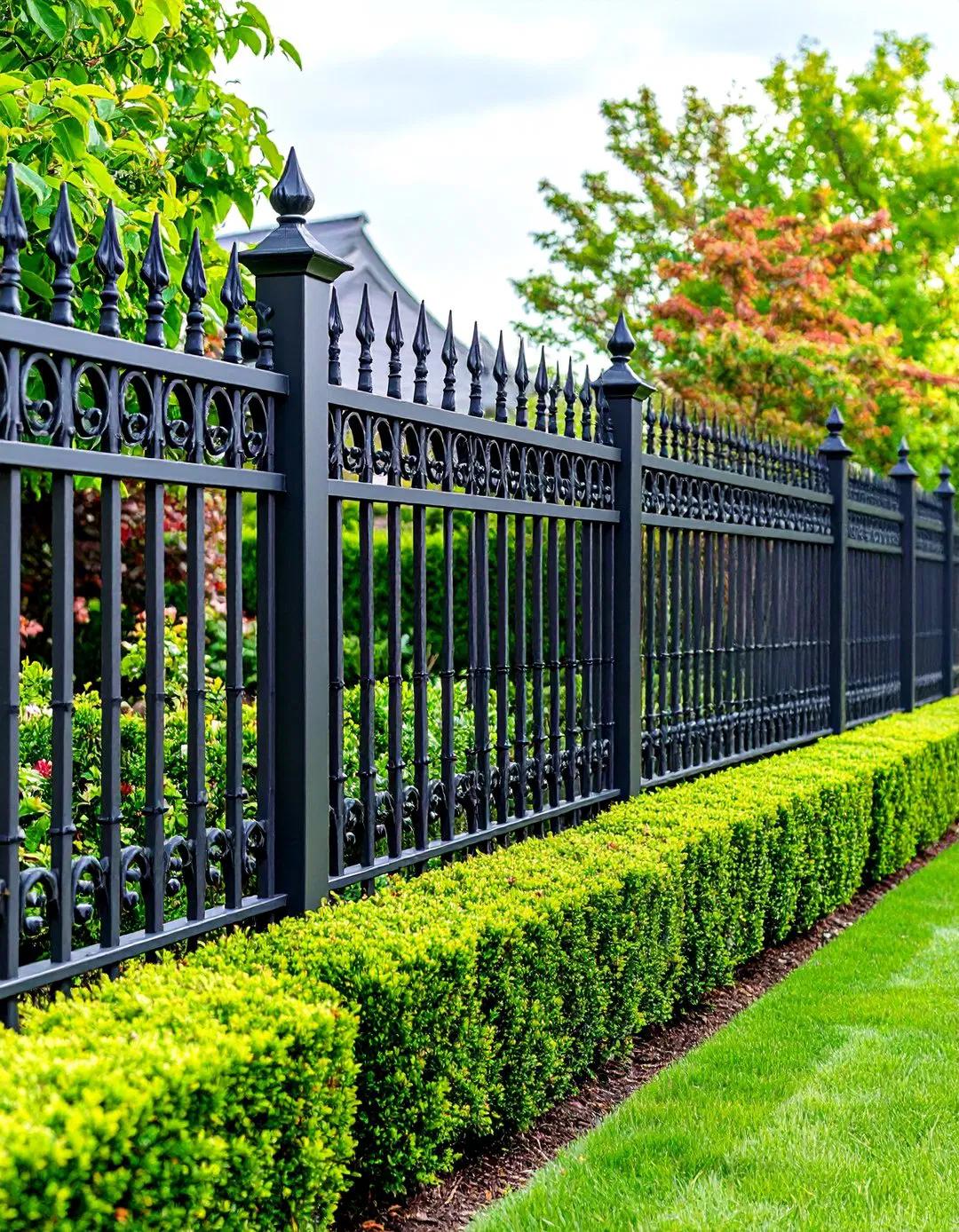
Part 1: Wrought iron fence repair
How to remove rust from an iron fence
Rust is the repair that matters most, because rust left alone eats through solid iron eventually — and caught early, it's an afternoon's work. Here's how to remove rust from an iron fence and repaint it so it stays gone:
-
Strip back to sound metal
Scrape loose paint and flaking rust with a putty knife and wire brush. For heavier rust, a wire wheel or flap disc on a drill or angle grinder makes fast work of it; for light surface rust, sandpaper and a wire brush suffice. Wear eye protection and a dust mask — rust and old paint dust are not things to breathe. (If the fence may carry lead paint — possible on very old fences — don't dry-sand; look up lead-safe work practices or hire it out.)
-
Treat what's left
Feather the edges of the remaining sound paint so the new coat won't show a step. Wipe down with a cloth dampened with mineral spirits. A rust-converter product can stabilize pitted areas you can't get perfectly clean; follow its instructions before priming.
-
Prime, then paint — don't skip the primer
Apply a rust-inhibiting metal primer to all bare metal, then two coats of a quality exterior metal paint (oil-based enamels and dedicated direct-to-metal paints are the traditional choices). Spraying gives the smoothest finish on pickets and scrollwork; a small brush handles touch-up areas. Thin, full-coverage coats outlast one thick one.
Where rust matters most: the bottom rail and picket bases near soil and mulch, weld points, and anywhere water sits. A fence that gets this treatment wherever paint chips appear can go decades between full repaints — typically every 5–10 years in harsh climates, longer in dry ones, varying by exposure.
Broken welds and bent pickets
This is where honesty matters: re-welding a broken picket or rail joint is professional work. It needs a welder (and welding skill), the joint ground clean, and the repair repainted to match. Mobile welding services and metal fabricators do this routinely — expect a service-call minimum rather than a per-inch price, and batch all your broken welds into one visit. Badly bent pickets on a fabricated fence may need to be cut out and a matching picket welded in; on ornamental work, a good fabricator can replicate profiles you can't buy.
Sagging iron gates
Iron gates are heavy, and they sag for heavy-gate reasons: hinge wear, a hinge post that's moved, or a frame that's racked. Check in order — post plumb and footing first, then hinge condition (worn barrel hinges can sometimes be rebuilt by a fabricator), then the frame's diagonal. A gate that drags but whose post is sound often just needs its hinges adjusted or replaced by a welder. Don't simply lift and force it: you'll bend something you can't bend back.
Iron splits the difference
Rust removal and painting: classic DIY. Welds, fabrication and heavy gates: a fabricator's trade. Our guide draws the line job by job.
Part 2: How iron fences are built and installed
Unlike every other fence type here, an iron fence is fabricated, not just assembled. Panels and gates are welded up in a shop — pickets welded to rails, scrollwork and finials fitted, the whole thing cleaned and painted or powder-coated — then installed on site. Understanding that tells you exactly what a homeowner can and can't do.
What installation involves
- Posts: heavy steel posts set in concrete footings, sized to carry real weight — gate posts especially, which take a loaded gate's full leverage.
- Panels: shop-welded sections are leveled and welded or bracketed to the posts on site, following grade by stepping or by custom-raked fabrication on slopes.
- Gates: fitted with heavy barrel or sealed-bearing hinges, aligned, and latched — alignment here is skilled work because the gate's weight punishes small errors.
- Finish: site welds are ground, primed and painted to match the shop finish.
What you can and can't DIY
Realistic DIY
- Rust removal, priming and repainting
- Touching up chips before rust starts
- Lubricating hinges and latches
- Tightening bracketed (non-welded) panel hardware
- Clearing soil and mulch away from the bottom rail
Professional work
- All welding: broken joints, replacement pickets
- Fabricating panels, gates and scrollwork
- Full installation of a fabricated fence
- Rebuilding or re-hanging heavy gates
- Anything structural on a historic fence
Pre-made steel panel systems that imitate wrought iron (and install like aluminum panels) do exist and are DIY-installable — but they're steel panel fencing, not fabricated iron, and they're repaired like panels, not welds.
Wrought iron fence questions, answered
How do I keep an iron fence from rusting again?
Paint integrity is everything. Inspect yearly — spring is ideal — and touch up any chip or scratch down to metal before rust establishes: wire-brush the spot, spot-prime, paint. Keep soil, mulch and sprinklers off the bottom rail, and trim plants back so the fence dries after rain. That routine, honestly followed, is the whole secret of 50-year iron fences.
Is my fence really wrought iron, or steel?
Probably steel, if it was made in the last several decades — true wrought iron is rarely produced now, and the term survives as a style name. Pre-made panels with perfectly uniform pickets are welded steel tube. Genuinely old, hand-forged fences show slightly irregular pickets and forge marks. For repair purposes it hardly matters: rust care is identical, and a fabricator works both.
How much does wrought iron fence repair cost?
DIY rust-and-paint work costs materials only — wire wheels, primer and paint for a typical fence run into the low hundreds at most. Professional welding repairs are usually priced as a service call plus time, varying by area; a full professional strip-and-repaint of a long run is the expensive scenario and worth quoting against the fence's remaining decades of life. For broader fence pricing context, see our cost guide.
Can rust damage be too far gone to repair?
Yes — when rust has eaten a picket or rail through, or section loss makes the joint weak, that piece needs cutting out and a fabricated replacement welded in. The test is structural: sound metal around the rust means repair; metal you can flake away with a screwdriver across a whole section means fabrication. A metal shop can assess it quickly.